
Winter 2026 Newsletter

The only thing we can say with certainty during uncertain times is that informed decision-making matters—and reliable information is key. That’s the intent behind our quarterly newsletter, Insights & Perspectives: to deliver timely expertise from industry leaders who understand the nuances of our unique markets.
In this winter edition, we are pleased to feature two distinguished guest contributors:
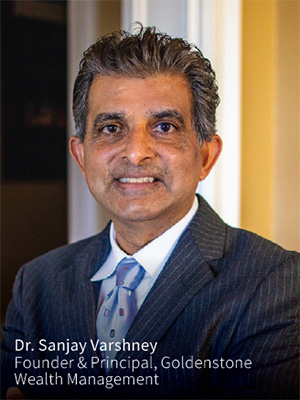
Dr. Sanjay Varshney, founder and principal of Goldenstone Wealth LLC and professor of finance at Sacramento State, provides a timely economic outlook, highlighting continued growth momentum, easing borrowing costs, and strong corporate performance heading into 2026—while noting that labor-market pressures and global uncertainty may still create pockets of volatility.
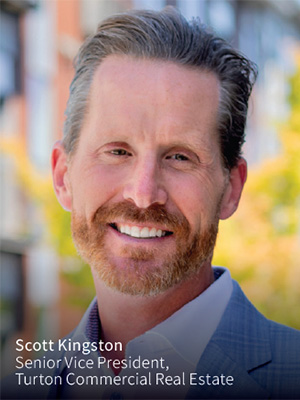
Scott Kingston, senior vice president at Turton Commercial Real Estate, who explores the major shift underway in suburban mixed-use development—and how these emerging projects are creating new opportunities to support housing, commercial growth, and infrastructure investment across Northern California.
This edition introduces two of our business clients whose experiences highlight both resilience and the value of trusted partnerships. We share the story of Clean Site Services’ Lance Soares, who has grown his Sacramento-based company through authenticity, hard work, and a strong banking relationship. We also feature a long-time client who faced repeated fraud attempts and found lasting peace of mind through our Positive Pay service—a reminder of how critical layered protection has become in today’s fraud landscape.
In times of rapid change, the value of staying informed cannot be overstated. Knowledge empowers stronger decisions, protects businesses and households, and creates opportunities to grow with confidence. Through Insights & Perspectives, we remain committed to equipping you with valuable information that supports your financial well-being and long-term plans.
Thank you, always, for choosing Bank of Marin as your trusted financial partner.
Warm regards,

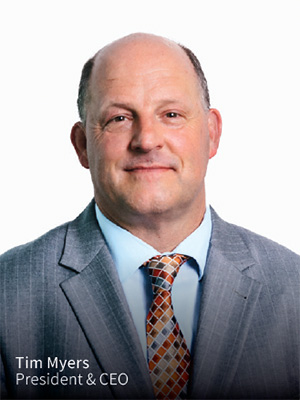
Tim Myers
President & CEO
Bank of Marin
THE GOOD
2025 closed on a positive note. Markets moved higher despite tariffs, and the economy grew strongly despite being K shaped. Real GDP growth reached 3.8% in the second quarter and 4.4% in the third quarter, with expectations that the fourth quarter approached 5%. These results demonstrate resilience amid policy uncertainty, tariffs, and geopolitical risks, as well as accelerating fundamentals. This momentum is likely to carry into 2026, making recession risk minimal.
As predicted in the last newsletter, the Federal Reserve delivered two additional rate cuts in 2025, bringing the total to three for the year and seven over the past two years. Rate normalization is a welcome shift, bringing monetary policy closer to appropriate levels. I expect another two rate cuts in 2026, particularly as a new Federal Reserve Chair is likely to align more closely with President Trump’s agenda and move policy toward a 3% neutral rate.
Inflation risk is now lower than the risk of labor market deterioration. The Federal Reserve has shifted focus from inflation toward weakening job openings, which now fall below the number of unemployed individuals.
The latest CPI reading of 2.6% reinforces expectations of deflationary pressure from demographics and productivity gains. Lower rates will reduce borrowing costs for consumers and businesses, with benefits becoming increasingly visible across the economy.
The AI trade remains a major driver in 2026, with an estimated $600 billion in planned infrastructure and investment by mega cap companies including Microsoft, Alphabet, and Meta. Combined with productivity growth and front loaded tax benefits from the Big Beautiful Bill, these factors support economic expansion. Corporate earnings are projected to grow 15%, with the Magnificent 7 closer to 20%. Markets could deliver high single digit to low double digit returns, with broader participation from mid caps, small caps, and emerging markets.
THE BAD
The labor market continues to weaken beneath the surface. Job openings have declined sharply, and available jobs now trail the number of unemployed workers. While headline unemployment remains stable, layoffs, particularly in technology, have increased, and workers aged 20 to 25 face difficulty securing entry level roles. AI driven displacement of white collar jobs remains a growing risk. I expect continued labor market deterioration. While higher income households benefit from equity market gains, the bottom half of households remain financially strained.
Equity markets remain richly valued, largely driven by AI related stocks and the Magnificent 7. Concentration remains high, with the top 10 companies driving earnings and valuations. Midterm elections in 2026 historically correlate with lower S&P 500 returns. Any slowdown in AI capital spending or earnings disappointments could pressure markets.
Fiscal policy remains a concern, including the possibility of another government shutdown. The Trump Administration is likely to continue running widened deficits to support growth. Interest expense on U.S. debt now represents roughly 20% of the federal budget and exceeds defense spending.
Housing continues to adjust to higher rates. New and existing home sales and median prices remain weak, with first time buyer activity down roughly 50%. Buyer and builder confidence remain low. While mortgage rates may improve modestly, they are likely to remain near 6% for a 30 year fixed loan. Markets may remain choppy in the first half of the year as housing, labor, and geopolitical risks evolve.
THE UGLY
Geopolitical risk remains elevated, including conflicts involving Ukraine, Russia, Israel, Gaza, Iran, China, and Taiwan. U.S. tensions with allies persist around trade, tariffs, NATO, and other strategic issues.
While concerns about global movement away from U.S. assets faded last year, recent dollar weakness and rising Japanese yields highlight the risks of excessive Treasury issuance. I expect the 10 year Treasury yield to remain near 4.5%, but a move above 5% would signal meaningful risk.
WHAT THIS MEANS FOR YOU
- Private capital and hedging strategies will gain importance as equity markets remain narrow.
- The yield curve is likely to steepen as rates normalize further.
- Consumers and businesses should benefit from lower borrowing costs.
- A challenging job market will test both job seekers and employed workers.
- The United States will continue to lead in economic growth and AI investment in a rapidly evolving global environment.
 |
Dr. Sanjay Varshney Founder & Principal Goldenstone Wealth Management (916) 799-6527 sanjay@goldenstonewealth.com goldenstonewealth.com |
The views expressed in this article are solely those of the author and do not represent the opinions of any other individual or organization. This is not financial advice; please consult with qualified professionals for any such matters.
A NATIONAL SHIFT, ACCELERATING IN SACRAMENTO
Suburban development across the U.S. is moving away from low-density, auto-oriented formats toward higher-density, experience-driven mixed-use environments. In Greater Sacramento, this transition is happening faster than in comparable metros due to the region’s demographic trends, municipal land strategies, and evolving capital-market dynamics.
The Sacramento metropolitan area reached 2.29 million residents in 2026, sustaining 1%+ annual growth since 2023 and outpacing both California and national averages. Much of this momentum comes from in-migration from the Bay Area and Southern California. These residents arrive with higher incomes and urban-shaped expectations, influencing demand for walkability, curated retail, and amenitized suburban environments. This demographic profile is reshaping how development is programmed and financed across the region.
WHY SACRAMENTO IS MOVING FROM SUBURBAN SPRAWL TO EXPERIENTIAL DENSITY
Sacramento’s traditional suburban value proposition—lower land costs, family-oriented housing, quality schools—remains intact. What has changed is how households want to live within these environments. The region’s median age of 36 reflects a millennial-heavy population, now the primary household-formation cohort. This group consistently seeks suburban locations that still offer urban features: pedestrian access, food and beverage clusters, public gathering spaces, and reduced dependency on cars.
These preferences directly affect multifamily absorption, retail performance, and overall project viability. As a result, developers are increasingly turning to vertically integrated mixed-use concepts that stack residential, retail, office, and hospitality in pedestrian-scaled formats. For Sacramento, this model offers three strategic advantages:
- Demand consolidation
In a region defined by expansive suburban nodes, mixed-use districts act as regional magnets, concentrating foot traffic and discretionary spending. - Diversified revenue streams
Combining multifamily, retail, hospitality, and parking generates a balanced income profile, smoothing volatility across cycles. - Phased capital efficiency
Multi-use entitlements allow developers to validate demand and recycle capital across sequential phases, reducing exposure to cost inflation and interest-rate volatility.
The result is a steady conversion of aging strip centers, underutilized office parks, and commercial corridors into higher-productivity economic districts.
THE SACRAMENTO MIXED-USE PLAYBOOK: EXPERIENCE DRIVES ECONOMICS
Across Greater Sacramento, high-performing mixed-use environments follow a consistent sequencing approach: establish a compelling user experience first, then layer density around it.
Ice Blocks in Midtown illustrates the model. Its success stems from strong design identity, an intentional tenant curation strategy, and a public realm that encourages repeat visitation. The project created durable regional “gravity,” proving that placemaking is a core economic driver—not an aesthetic enhancement.
This same logic now guides the region’s suburban master plans, including:
- Project Elevate (Elk Grove)
- Grande Gateway (West Sacramento)
- DoVa (Rancho Cordova)
- Roseville Station
- Braden
Each begins with an anchor experience—culinary destinations, public spaces, entertainment, or hospitality—and adds phased residential and commercial density as demand grows. In Sacramento’s competitive suburban landscape, differentiation through experience is increasingly what dictates absorption, rent levels, and long-term revenue durability. Mixed-use and master-planned development is actively encouraged through municipal policy, including Sacramento’s 2040 General Plan.
MUNICIPAL LAND AS A CATALYST FOR PRIVATE DEVELOPMENT
A major Sacramento-specific market driver is the expanding role of public land. Cities and public agencies across the region now view land holdings as strategic equity, capable of unlocking private investment, de-risking early project phases, and generating long-term fiscal returns.
Common P3 structures include:
- Land sales, accelerating private-sector execution
- Land contributions, enabling public participation in upside
- Ground leases, allowing agencies to retain long-term control while monetizing development
The region’s most prominent example is the Golden 1 Center / DOCO redevelopment, which used public land and infrastructure participation to catalyze significant private investment and generate an estimated $665 million in annual economic output. This model now informs how suburban jurisdictions approach large mixed-use districts.
SACRAMENTO’S MIXED-USE MOMENT: WHERE GROWTH, LAND, AND CAPITAL CONVERGE
Today, cities throughout the region are deploying refined incentive tools—financing districts, cost-sharing for infrastructure, and phased entitlements—to make projects viable in a high-cost construction environment. In Sacramento’s fragmented suburban infrastructure network, municipal participation is often the determining factor in project feasibility and timing.
IMPLICATIONS FOR LENDERS AND CAPITAL PROVIDERS
For banks and other capital providers, Sacramento’s shift toward mixed-use nodes offers substantial opportunity alongside higher underwriting complexity.
Advantages
- Long-duration financing pipelines across land, vertical development, and permanent debt
- Lower entitlement and infrastructure risk when public agencies participate
- Improved stabilization due to diversified income streams
Market complexities
- Absorption varies by submarket, requiring multi-product sensitivity analysis
- Phasing risk is significant, as experiential anchors must succeed before density can be monetized
- Public funding reliability differs by city, affecting infrastructure delivery and capital timing
Capital partners that engage early with developers and municipalities to shape phasing, structure incentives, and evaluate district-level economics—not just single-asset metrics—will be positioned to capture the region’s emerging pipeline.
HUMAN-SCALE DESIGN AS THE PERFORMANCE VARIABLE
In Sacramento, density only creates value when executed at a human scale. Outperforming projects share key design attributes:
- Regional access via highways and emerging transit
- Structured parking that balances density with convenience
- Walkable micro-districts centered on food, beverage, and social uses
- Authentic integration with natural amenities—or credible built public nature realms
These elements influence not only rents and absorption but also municipal identity and talent attraction.
THE NEXT DECADE: SACRAMENTO’S SUBURBAN URBANIZATION
Greater Sacramento is positioned to capture outsized household and spending growth through experiential suburban nodes. Unlike many urban cores facing structural headwinds, Sacramento’s suburban markets can integrate density, walkability, and convenience without legacy barriers.
For municipalities, this represents a generational opportunity to convert land into long-term fiscal engines. For developers, it enables scalable, multi-phase execution. For banks and capital providers, it creates a pipeline of high-impact, complex financings.
Sacramento’s suburban future is vertical, experiential, and built through sustained public-private collaboration.
 |
Scott Kingston Senior Vice President Turton Commercial Real Estate DRE 01485640 (916) 573-3309 scottkingston@turtoncre.com turtoncre.com |
The views expressed in this article are solely those of the author and do not represent the opinions of any other individual or organization. This is not financial advice; please consult with qualified professionals for any such matters.


When you talk to Lance Soares, you experience his positivity, passion, and pride for his work and his family. You will also leave the conversation fascinated about the portable restroom business based on his stories of leading Clean Site Services for more than 20 years.
Based in Sacramento and serving a broad region in the greater Bay Area, including Napa and San Jose, Lance has built his business literally from the ground up.
From street sweeping and large-scale fencing projects, to porta-potties, his business is proof that hard work and trusted relationships can take you far, as well as top-notch service. As he shares, “with 90 trucks on the road, it’s critical to focus on maintaining your equipment and providing top-notch service – as well as running a business with integrity. That’s what customers expect, especially when ‘clean’ is in your name.”
Working together with his wife, a CPA who he met in college at Sacramento State, the business today is primarily in the portable restroom business with majority of revenue coming from servicing large commercial contractors and major concerts and sporting events. “We’ll have 400 restrooms at the Sacramento Marathon, for example, we service the South Lake Tahoe concert series, and a real ‘chest thump’ for us has been working the Silverado PGA golf tournament in Napa.”
In the off-season for events, Lance relies on commercial fencing projects at construction sites, schools, and office buildings where they often get the restroom business for these projects as well. As he says, “in an ideal world, our top commercial customers take advantage of all the services we provide, making it easy for them and us.”
In the early 2000s when Lance’s company was experiencing significant growth, including their purchase of Clean Sweep Environmental, a friend suggested he talk to American River Bank to get some financial advice. “When I first met Bill Young, President of American River Bank, he came to our office which was a modular trailer in a muddy yard. While dressed in a suit and nice shoes, he didn’t flinch at the surroundings, and I’ve always smiled that he got mud on his shoes for us. We opened our account with the bank that day and have never looked back.”
As Lance remembers his early days with the bank, he reflects on access to consultative resources and expertise he didn’t know he needed, as well as Bill’s professionalism. “In our industry, it’s easy to make fun of yourself with a silly name or logo and we’ve never bought into that. I prefer doing business with a firm handshake and a promise to fulfill your obligations and Bill was exactly like that. One of the first things he did for us was to suggest picking up our deposits, which was a huge time-saver and a solution we didn’t even know existed.”
In 2008, with the downturn in the market, Lance ran into some challenges like so many businesses at the time. “The bank helped us tremendously during some difficult months and it was because of our trusted relationship that they believed in us.”
Fast forward to 2021, Lance was initially apprehensive about Bank of Marin acquiring American River.
As he reflects, “I was invited to a Zoom call with Bank of Marin CEO, Tim Myers, who assured us that it would be a smooth transition without disruption, and asked that we “give them a shot”. That first face-to-face meeting did a lot to assuage our concerns, and they’ve been true to their word. We appreciate how their conservative approach aligns with our values – they ask good questions, don’t take unnecessary risks and provide insightful perspectives which helps us make good decisions for our company long-term.”
Today, with 140 full-time employees, Lance has invested heavily in inventory routing software to build efficiencies allowing them to take on more projects with the same sized staff. This is especially helpful during the summer months when construction projects, concerts and events are at their peak. “It’s been a big transition, requiring many hours of training, but will be well worth it for the future health of the business.”
Looking down the road, as he considers transitioning the company to one of his four now-adult children, he is reminded why he appreciates his team at Bank of Marin.
“It’s like Norm on the show, ‘Cheers’ – they are good, honest, trustworthy people who know your name because they’ve taken the time to get to know us. You can’t put a price on that.”
For whoever takes over the business when the time comes, “I don’t want to give them a car with bald tires – my goal is to set them up with a fresh oil change and a full tank of gas. Bank of Marin is helping us do just that and we and grateful for their ongoing teamwork and support.”
 |
Lance Soares President Clean Site Services & Clean Sweep Environmental (916) 253-3900 lsoares@cleansweepenviro.com cleansiteservice.com |

Fraudsters are attacking from every angle—stealing mail, forging checks, and deploying sophisticated cyber tactics to drain accounts. The impact is staggering; according to TransUnion’s H2 2025 Global Fraud Trends Report, U.S. businesses reported an estimated $114 billion in losses, while Federal Trade Commission data shows consumers lost $12.5 billion in 2024, a 25% increase over the previous year.
Beyond the financial hit, the real frustration lies in the time and effort required to recover funds, secure accounts, and reconfigure payment systems. For many businesses, these disruptions can strain operations and damage client relationships. A long-time Bank of Marin client—whose name has been withheld to prevent potential fraud—experienced firsthand the challenges of repeated fraudulent attempts. When a counterfeit check appeared, their representative advised two options: close and reopen the account or enroll in Positive Pay, a service that verifies the authenticity of every check and ACH transaction. The client initially tried Positive Pay on a temporary basis, but after deregistering and facing another compromise, they realized that true peace of mind was worth the commitment.
HOW POSITIVE PAY WORKS
“Clients who use Positive Pay submit a list of issued checks—including number, date, payee, and amount,” explains Dawna Dowdell-Dos Santos, Treasury Management officer at Bank of Marin. “We cross-reference this list against checks presented for payment. If something doesn’t match, we immediately contact the client to approve or reject the payment.” While Positive Pay requires some setup, it’s far less disruptive than closing accounts or notifying clients of delayed payments. And while it’s a feebased service, Dowdell-Dos Santos recommends pairing it with account notifications, which are included with Bank of Marin accounts. “Notifications can be customized to flag specific activity—such as withdrawals over a certain amount, cleared checks, and other parameters. This gives clients an extra layer of security.”
BUILDING A LAYERED DEFENSE
Protecting your business starts with awareness and action. Services like Positive Pay and account notifications help detect irregular activity before it becomes costly. Combine these tools with strong internal controls like regular account reconciliations and staff training, and you’ll create a layered defense that reduces risk and keeps your business running smoothly.